


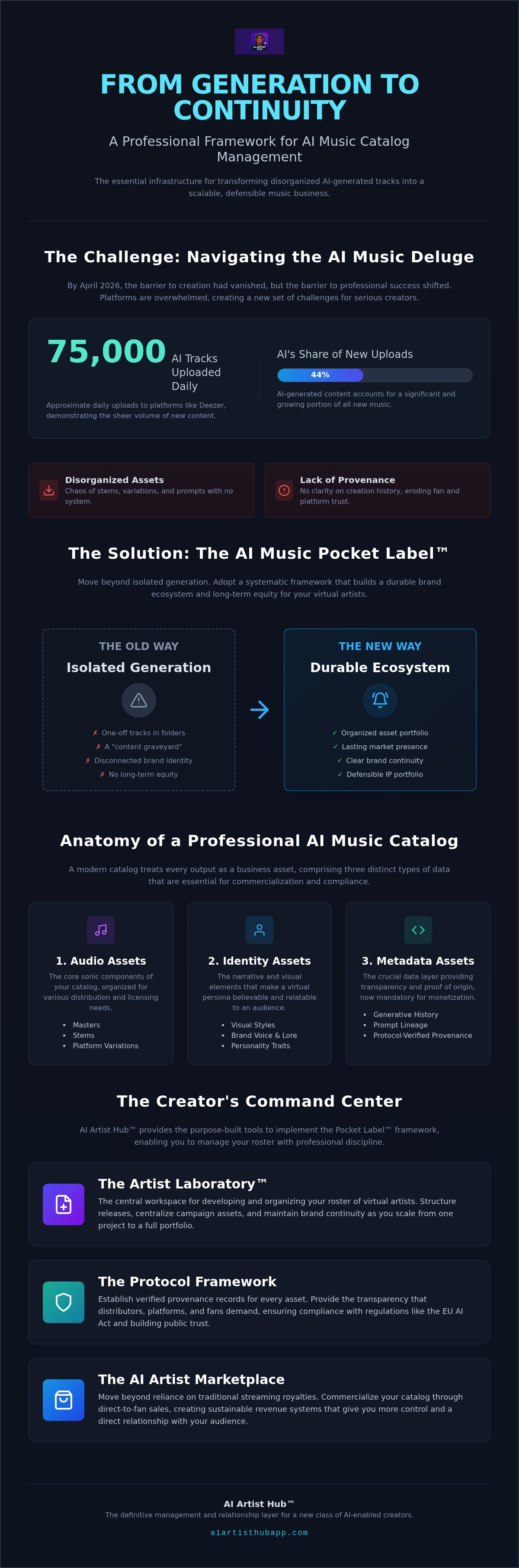
By April 2026, streaming platforms like Deezer were receiving approximately 75,000 fully AI-generated tracks every day, accounting for 44% of all new uploads. While the barrier to creation has vanished, the barrier to professional success has shifted toward AI music catalog management. You've likely experienced the chaos of disorganized stems and the lack of clarity regarding provenance in an era of mandatory AI disclosure. It's frustrating to build a visionary brand using extractive traditional label models that simply don't fit the AI creator's workflow.
This article provides the professional infrastructure you need to transform a collection of files into a scalable AI Music Pocket Label™. We'll show you how to master the systems of identity and commercialization required to establish trust and long-term brand continuity. We're going to explore the specific frameworks for verified provenance records and direct-to-fan revenue systems that bypass traditional industry hurdles. You'll learn to move beyond isolated generation and implement the Artist Laboratory workflows that ensure your virtual rosters have a lasting, defensible market presence.
Key Takeaways
- Transition from isolated track generation to a durable brand ecosystem to ensure long-term commercial continuity.
- Utilize the Artist Laboratory™ to structure and manage a diverse portfolio of virtual artist identities with professional discipline.
- Establish verified provenance records through the Protocol framework to master professional AI music catalog management and build public trust.
- Leverage the AI Artist Marketplace for direct-to-fan sales to move beyond reliance on traditional streaming royalties.
- Implement the AI Music Pocket Label™ framework to provide the essential infrastructure for scaling from a single project to a multi-artist roster.
What is AI Music Asset Management in the Pocket Label™ Era?
AI Music Asset Management is the systematic organization, verification, and commercialization of AI-generated music and virtual artist identities. While an overview of AI in music often focuses on the act of creation, professional management focuses on what happens after the render button is pressed. It involves treating every output as a business asset rather than a casual experiment. This approach is the foundation of the AI Music Pocket Label™ thesis. It enables creators to operate with the same discipline as a major label while using software leverage to manage a high volume of assets.
The AI Music Pocket Label™ is a functional framework for the modern digital era. It provides the essential infrastructure for the post-generation phase, focusing on identity, artist development, and ownership clarity. By using tools like the Artist Laboratory, you can manage portfolios of virtual identities with label-like discipline. This shift from casual hobbyist to professional founder is what separates a viral moment from a sustainable business.
Traditional asset management systems struggle with the speed and volume of AI creative output. They don't have fields for prompt lineage or model versioning. This lack of structure leads to a breakdown in trust with fans and platforms. By implementing a professional framework, you ensure your catalog remains navigable and commercially viable as it grows from ten tracks to ten thousand. You aren't just storing files; you're building a defensible intellectual property portfolio.
The Shift from Generation to Continuity
Isolated song generation creates a content graveyard. Without a management layer, tracks sit in folders, disconnected from any brand identity or audience. Continuity is what builds long-term equity for virtual artists. By focusing on the post-generation phase, you move from one-off tracks to a durable brand ecosystem. AI Artist Hub™ provides tools designed to help creators manage this transition, ensuring that every release contributes to a larger narrative. This human-centered infrastructure is essential in a machine-driven era. It ensures that the creator remains the visionary architect of the career.
Core Components of a Modern AI Music Catalog
A professional AI music catalog management system must account for three distinct asset types:
- Audio Assets: Masters, stems, and variations tailored for different platforms.
- Identity Assets: Visual styles, brand voices, and virtual artist lore that make a persona believable.
- Metadata: Generative history and Protocol-verified provenance records.
In the modern landscape, metadata must go beyond basic genre tags. Following the 2026 enforcement of the EU AI Act and platform mandates from Spotify and Apple, these records are no longer optional. They are the keys to monetization and platform compliance. A structured catalog provides the transparency that distributors and fans now demand.
The Artist Laboratory™: Structuring Your Virtual Artist Roster
The Artist Laboratory™ serves as the central command center for developing and organizing virtual identities. It's the environment where you bridge the gap between raw generation and professional brand development. Effective AI music catalog management begins with a centralized workspace that prioritizes brand continuity over isolated file storage. Managing multiple AI artist brands shouldn't lead to a loss of creative control. Instead, it requires a structured workspace that treats every persona as a distinct commercial entity. This systematic approach allows you to organize releases, campaign assets, and brand systems within the Hub, ensuring that your creative vision remains clear as you scale from a single project to a diverse roster.
Defining the Virtual Artist Identity
Establishing consistent brand systems for virtual personas is the foundation of long-term equity. A virtual artist needs more than just high-quality audio; they require a comprehensive visual world and a consistent brand voice. You can manage virtual music artists more efficiently by centralizing cinematic visuals and personality traits in one location. This organization ensures that every piece of marketing content reinforces the artist's lore. When building these personas, creators should review the Copyright Registration Guidance to understand how human creative direction impacts the legal standing of their work. Documentation of your specific creative decisions within the Lab provides the necessary context for identity verification and public trust.
Workflow Systems for High-Volume Catalogs
Professional AI music catalog management demands rigorous organization. High-volume output can quickly become unmanageable without standardized file naming and folder structures for your stems. Use the Planner and release tools within the Hub to align your creator goals with actual release cycles. This methodical approach enables you to scale from a single project to a diverse artist roster with label-like precision. By automating the transition from the Artist Laboratory to the Marketplace, you reduce the friction between creation and commercialization. This workflow ensures that every track is properly tagged, visually supported, and ready for its direct-to-fan debut. If you're looking for inspiration on how to structure your own roster, explore the existing virtual artists currently operating within the ecosystem.
Provenance and Verification: Establishing Trust via the Protocol
In the emerging AI music economy, provenance is rapidly becoming the new copyright. As regulatory bodies like the EU implement the AI Act and platforms like Apple Music mandate transparency tags, the ability to prove how a track was made is as valuable as the track itself. This shift makes AI music catalog management an exercise in radical transparency. While traditional copyright focuses on the legal protection of human-authored works, provenance focuses on the "chain of custody." It provides a verifiable trail from the initial prompt to the final master. This documentation is essential for building a professional brand that can survive the scrutiny of distributors and fans alike.
The Protocol provides the foundational framework for establishing this trust. It enables creators to generate ownership records that signal professional intent. Major labels are already exploring AI-powered media rights platforms to manage their own interests, and the Protocol offers similar leverage for the Pocket Label™. By using these tools, you clarify your relationship to the work and provide the metadata that modern streaming services require. It's about creating a reputation for reliability in a market often saturated with undisclosed, low-quality generation.
Documenting the Creative History
Tracking the creative history of a virtual artist is a core requirement for any serious operation. You should maintain a record of every iteration, arrangement, and human-led edit. For a detailed breakdown of this process, consult our AI music ownership verification guide. This transparency isn't just a legal precaution; it builds audience trust. Fans of virtual artists are often tech-native and value the "behind-the-scenes" process. When you share the generative history, you invite the audience into the Artist Laboratory, turning the creation process into a part of the brand's lore.
Verification Signals and Ownership Records
Verification tools provide the social proof necessary for virtual artists to thrive. They document identity signals that confirm a track belongs to a specific roster rather than being a random, unmanaged upload. This level of organization is the hallmark of effective AI music catalog management. It directly addresses industry concerns regarding consent, attribution, and licensing. By establishing these records early, you provide a clear framework for future commercial opportunities. These tools are designed to help creators document their process. They do not function as legal copyright guarantees. Instead, they provide the essential evidence of creator agency that platforms and partners now demand.
Scaling Your AI Music Asset Management Systems
Scaling an AI music venture requires a fundamental shift in how you view AI music catalog management. Moving from a single project to a roster of 100 virtual artists is impossible without a repeatable system. You need to implement release cycles that function like a well-oiled machine. This involves creating standardized workflows for every new persona you bring into the Lab. By establishing these systems early, you ensure that your creative vision remains the driving force even as your output increases.
Automation plays a critical role in this transition. It manages high-volume music asset catalogs by handling the repetitive tasks of tagging, organizing, and preparing tracks for market. Instead of spending hours on manual metadata entry, you can focus on the strategic development of your virtual artists. Automation ensures that every asset is properly categorized and ready for deployment at a moment's notice. This efficiency is what allows a small team to operate with the same impact as a traditional major label.
Direct-to-fan relationships are the ultimate goal of a scalable label. Relying solely on borrowed audiences from traditional DSPs leaves your business vulnerable to algorithm changes and platform shifts. The Marketplace is designed to help you build direct connections with your listeners. It provides the tools for digital product sales that bypass traditional streaming hurdles and extractive models. This approach secures your revenue streams and builds a loyal community around your virtual roster, creating a durable business that thrives outside of the "content graveyard."
Roster Management Best Practices
Maintaining a balance between quantity and quality is the primary challenge in an AI-enabled environment. High output shouldn't lead to brand dilution or a loss of creative identity. You can use the Academy to learn professional business scaling strategies that preserve your creative standards while increasing production. Effective roster management involves treating every virtual persona as a distinct intellectual property asset. Follow our strategic guide to protecting virtual artist IP to ensure your growing catalog remains legally and commercially defensible.
Infrastructure for Modern Labels
Building your business on generator-agnostic tools provides the most durable foundation. You don't want your entire catalog tied to the fate of a single AI model or a specific generation platform. Creating a portable business ensures that your assets retain value regardless of which generative technology you use today or tomorrow. For those managing high-volume needs, leveraging the Enterprise AI Artist Operating Environment provides the necessary scale. This professional infrastructure ensures that your Pocket Label™ remains agile and resilient in a fast-moving market, allowing you to master AI music catalog management at any scale.
Scale your roster with professional infrastructure
Commercialization: Selling Direct-to-Fan via the Marketplace
The transition from a creative project to a commercial venture requires a platform built for direct-to-fan engagement. Traditional streaming models often prioritize volume over value, leaving AI creators with razor-thin margins and little control over their listener data. The AI Artist Hub Marketplace provides a high-utility environment where you can sell music and digital products directly to your core audience. This ecosystem is designed to help you capture the full value of your creative output without the extractive hurdles of traditional industry gatekeepers. By moving beyond a reliance on streaming royalties, you establish a more resilient revenue model that rewards brand loyalty and high-quality production.
Structured AI music catalog management is the engine that drives these faster commerce cycles. When your assets are organized, verified, and tagged within a professional framework, the path from the Artist Laboratory to the storefront is seamless. You don't waste time hunting for stems or verifying provenance records during a release window. Instead, you deploy assets with the confidence that every technical and metadata requirement is already met. This operational efficiency allows you to respond to market trends in real time, ensuring your virtual roster remains relevant and commercially active.
Building a lasting creative business depends on audience ownership. Relying on third-party algorithms to reach your fans is a significant business risk. When you sell directly via the Marketplace, you own the relationship with your customers. This direct connection provides the data and insights necessary to refine your virtual artist brands and tailor your future releases. It transforms your catalog from a collection of files into a living, breathing economy where fans can support their favorite virtual identities through unique digital products and exclusive content.
Direct-to-Fan Commerce Systems
Direct relationships are fundamentally more durable than DSP-dependent models. They protect your business from sudden changes in platform policies or payout structures. By selling digital products directly to your core fan base, you create a sustainable financial foundation for your Pocket Label™. This approach encourages deeper fan engagement and allows for more creative flexibility in how you package and sell your work. To ensure you're following best practices, read our guide on how to sell AI artist assets professionally. Mastering AI music catalog management ensures that these commercial assets are always ready for high-stakes release cycles.
Establishing Long-Term Creator Equity
Treat every release as a building block for long-term artist equity. You aren't just selling tracks; you're developing intellectual property that gains value over time through consistent market presence. Use the release tools within the Hub to maintain a steady cadence of high-quality content that keeps your audience engaged. This disciplined approach to brand development ensures that your virtual roster becomes a defensible portfolio of assets. By focusing on continuity and professional infrastructure, you position your venture as a leader in the emerging AI music economy.
Establish your AI Music Pocket Label™ today
Master the Future of the AI Music Economy
Professional creators are moving beyond the novelty of generation to build durable business ecosystems. You've learned that effective AI music catalog management requires more than just file storage; it demands a systematic approach to identity, provenance, and direct-to-fan commerce. By utilizing the Artist Laboratory to develop virtual rosters and the Protocol to establish trust, you provide the essential infrastructure that traditional models lack. This human-centered approach ensures that your creative agency remains the core of every release as you scale your operations.
Our generator-agnostic infrastructure enables you to maintain brand continuity across any model or platform. It's time to transition from isolated tracks to a scalable brand portfolio using a professional business suite built specifically for AI creators. The tools for verification and direct-to-fan commercialization are ready for your next move. Take control of your creative output and build a venture that thrives on its own terms. You have the vision. We provide the architecture for your success.
Launch your AI Music Pocket Label™ and organize your roster
Frequently Asked Questions
What is the difference between AI music storage and asset management?
Storage simply holds your files, while asset management provides a functional architecture for commercialization. Professional AI music catalog management involves organizing stems, visual identities, and metadata to ensure every track is release-ready. It transforms a folder of disconnected renders into a structured business asset. This system enables you to track provenance and maintain brand continuity, which is impossible with basic cloud storage. It's the difference between a graveyard of files and a scalable roster.
Can AI Artist Hub™ help me prove I own my AI-generated music?
AI Artist Hub™ provides tools designed to help you document the creative process and establish a verifiable chain of custody. While we don't offer legal ownership guarantees, our Protocol records identity signals and generative history. These records provide the transparency required by platforms like Spotify and Apple Music. By documenting your creative decisions, you establish the necessary proof of agency that partners and fans demand in the modern AI music economy.
How many virtual artists can I manage within the Artist Laboratory™?
The Artist Laboratory™ is built for scalability, enabling you to manage everything from a single project to a roster of 100 virtual identities. Our infrastructure provides the modular workspaces needed to develop distinct brands without losing creative control. You can organize visual assets, brand lore, and release cycles for each persona individually. This high-volume capability ensures that your business can grow alongside your creative output while maintaining label-like discipline across every artist.
Does the platform work with any AI music generator?
Yes, our platform is entirely generator-agnostic. We provide the management layer that happens after you create audio, meaning you can import tracks from any AI music software. This portability is a core feature of a durable business foundation. It ensures your AI music catalog management remains effective even if you switch tools or models. You aren't locked into a single ecosystem, which protects the long-term value of your virtual artist portfolio.
What is an AI Music Pocket Label™ and how does it differ from a traditional label?
An AI Music Pocket Label™ is a framework that allows individual creators or small teams to operate with the discipline of a traditional record label. It differs from old models by using software leverage instead of large overhead costs to manage virtual identities. You maintain full creator agency while utilizing professional infrastructure for development and distribution. This model focuses on building lasting brand equity through direct-to-fan relationships rather than extractive, middleman-heavy contracts.
How do provenance tools help with music licensing?
Provenance tools provide the transparency that music supervisors and licensees now require. By documenting the origin and generative history of a track, you build the trust necessary for commercial placements. These tools clarify the relationship between the human creator and the AI tools used, addressing industry concerns regarding attribution and consent. Having a verified record makes your catalog more attractive to professional partners who need to mitigate legal risks before licensing content.
Can I sell digital products other than music on the Marketplace?
Yes, the AI Artist Hub Marketplace supports a wide variety of digital product sales. You can sell visual assets, virtual artist lore, or exclusive access alongside your music. This direct-to-fan commerce environment is designed to help you diversify your revenue streams beyond streaming royalties. By offering unique digital goods, you deepen the connection with your audience and build a more resilient business that rewards the total creative world of your virtual artists.
Is AI Artist Hub™ a legal service for copyright registration?
No, AI Artist Hub™ is not a legal service and does not provide legal advice or copyright registration. We provide the technical infrastructure and documentation tools to help you manage your assets and establish provenance records. While our Protocol helps you document human creative input, you should consult with legal professionals regarding specific copyright filings. Our goal is to provide the management layer that supports your business operations and platform compliance needs.

Article by
Julius J. White (VVS Jules)
Julius J. White (VVS Jules) is the Founder & CEO of JJW AI Studios™ and builder of AI Artist Hub™, a creator-first operating platform for the emerging AI music economy. A musician, songwriter, producer, entrepreneur, and systems builder, he developed the AI Music Pocket Label™ framework around a simple idea: generation is only the beginning. His work focuses on the identity, provenance, credits, ownership context, permissions, artist development, direct-to-fan relationships, commerce, trust infrastructure, and business systems creators need to build durable AI artist brands, organized catalogs, and long-term creative ventures.
Disclaimer
This article is provided for general educational and informational purposes only and does not constitute legal, financial, tax, investment, or other professional advice. Laws, regulations, platform policies, technology, and industry practices may change over time. References to AI Artist Hub™, UP3™, UP3 PLAY™, provenance, verification, ownership assertions, permissions, creator tools, protected media, streaming or platform policies, or AI-related rules describe general information and current product capabilities where verified. They do not constitute government registration, legal adjudication, third-party rights clearance, regulatory approval, copyright ownership, guaranteed authenticity, or guaranteed permission for commercial use. Readers should independently verify current requirements, review applicable platform and rights terms, and consult qualified professionals when appropriate.
