


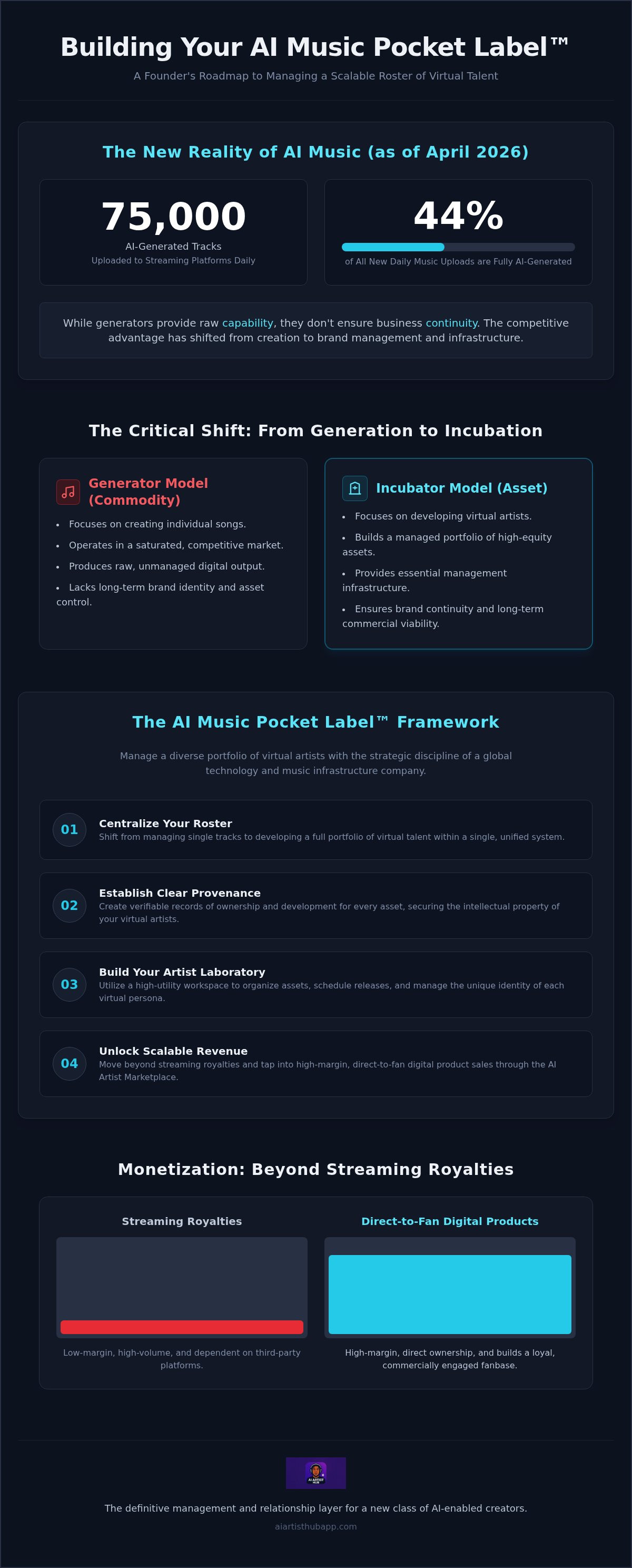
As of April 2026, approximately 44% of all new music uploaded daily to streaming services is fully AI-generated, representing a significant output of 75,000 tracks every 24 hours. You likely see the potential in this volume, yet you also understand that capability doesn't automatically lead to business continuity. While generators provide the raw capability, a professional AI artist development platform provides the essential infrastructure for long-term brand identity. Most creators struggle to manage multiple virtual personas because they lack a centralized system for provenance, verification, and asset management.
Managing a growing roster shouldn't feel like a manual grind that drains your strategic focus. You want to scale from a single experimental track to a full portfolio of virtual talent without losing track of ownership or brand integrity. This guide delivers a structured roadmap designed to help you build your own AI Music Pocket Label™. We'll examine how to utilize the Artist Laboratory to manage virtual identities, establish clear provenance records, and implement scalable direct-to-fan revenue streams that enable your venture to remain commercially viable in the evolving digital economy.
Key Takeaways
- Transition from a casual creator to a professional founder by shifting focus from simple music generation to long-term virtual artist incubation.
- Leverage a professional AI artist development platform to centralize your roster management, ensuring every virtual identity maintains clear provenance and brand continuity.
- Build a high-utility Artist Laboratory workspace to organize assets, schedule releases, and secure the intellectual property of your virtual talent.
- Unlock scalable revenue streams through the AI Artist Marketplace, moving beyond streaming royalties toward high-margin direct-to-fan digital product sales.
- Adopt the AI Music Pocket Label™ thesis to manage a diverse portfolio of virtual artists with the same strategic discipline as a global technology and music infrastructure company.
What is a Virtual Music Artist Incubator in 2026?
In the current digital economy, raw music generation has become a commodity. With approximately 75,000 AI-generated tracks uploaded to streaming platforms every day as of April 2026, the competitive advantage no longer lies in the ability to create sound. It resides in the ability to build and manage a brand. A virtual music artist incubator is a business-first environment designed to transform these raw outputs into high-equity assets. While a generator creates a song, an incubator develops an artist. This distinction is the foundation of the AI Music Pocket Label™ model, where creators move beyond releasing one-off tracks to managing a scalable portfolio of virtual identities through a professional AI artist development platform.
The Evolution of Virtual Artist Development
The industry has shifted significantly from the era of expensive, centralized holographic performers to a decentralized landscape of virtual talent. The concept of a virtual persona has matured from a marketing novelty into a robust financial asset class. Modern creators don't need a massive physical studio or a traditional label contract to launch a global brand. Instead, they utilize the Pocket Label model to operate with the discipline of a major record company while maintaining the lean overhead of a software-driven startup. Establishing value in this space requires more than just a catchy hook; it demands rigorous verification and provenance. Without a clear record of how an artist was developed and who owns the underlying assets, a virtual brand cannot sustain long-term commercial interest or trust.
Why Management Infrastructure Trumps Generation Tools
The market for generation tools is saturated. In 2026, anyone can prompt a model to produce a high-quality track, but very few can manage the complex lifecycle of a full roster. The new frontier is the management layer. A professional incubator provides the necessary infrastructure to handle what happens after the "generate" button is clicked. This is where the Artist Laboratory becomes essential. It acts as a central command center for your workflow, allowing you to organize visual assets, manage voice models, and track release schedules across multiple identities simultaneously. This systematic approach ensures brand continuity, which is the single most important factor for fan retention and revenue growth. A Virtual Music Artist Incubator is the essential business layer that transforms raw AI output into a scalable, managed portfolio of virtual talent.
By focusing on the management of these identities through a structured Protocol, founders can ensure that their virtual artists are not just digital ghosts, but verified entities with clear market positioning. This shift from "creator" to "label owner" is what defines the most successful ventures in the emerging AI music economy.
The Core Infrastructure of a Professional AI Artist Hub
Operating a successful virtual roster requires a shift from creative experimentation to industrial discipline. The Artist Laboratory serves as the primary command center for this transition. Unlike traditional management tools that focus on physical logistics like tour buses or venue bookings, a professional AI artist development platform prioritizes digital asset continuity and intellectual property management. You need a single dashboard that allows you to jump between distinct virtual identities without losing the specific aesthetic or vocal parameters that define each brand.
This infrastructure must include a robust Business Intelligence layer. In 2026, the success of a virtual artist is measured by more than just stream counts. You must track engagement across social platforms, digital product sales, and marketplace interactions. Centralizing these data points ensures you can pivot your strategy based on real-world performance rather than guesswork. A sophisticated dashboard tracks the velocity of fan growth and identifies which virtual personas are driving the most direct-to-fan sales, allowing you to allocate resources with precision. This data-driven approach is what separates a professional incubator from a hobbyist project.
Setting Up Your Artist Laboratory
Setting up your Artist Laboratory involves more than just file storage. You must organize artist identities, visual assets, and voice models in a secure, structured environment. This organization is critical for maintaining provenance. By documenting the origin of every track and every visual element, you secure the foundation for long-term IP protection. This level of detail is what attracts major industry partnerships and supports sophisticated monetization strategies for virtual artists. Effective automation tools then allow you to apply marketing workflows specifically designed for these virtual personas, ensuring they remain active and engaging even as your roster grows.
Scaling Roster Operations Efficiently
Scaling your operations efficiently is the hallmark of the AI Music Pocket Label™ thesis. Moving from managing one virtual artist to managing 100 is impossible without automated release scheduling and roster-wide management tools. Automated workflows handle the heavy lifting of metadata tagging and release coordination, ensuring every artist in your roster maintains a consistent cadence without constant manual intervention. Professional subscriptions provide the necessary business infrastructure to maintain this high-volume output. To understand the full scope of this business model, review our How to Start an AI Music Label: Complete 2026 Guide. This systematic approach allows you to focus on high-level strategy while the platform handles the repetitive tasks of label management. If you're ready to build your command center, you can explore the Hub to see how these tools integrate.
Incubation Best Practices: From Concept to Commercialization
Success within a professional AI artist development platform requires a precise transition from abstract concept to market-ready asset. You aren't just creating content; you're building equity. This sequence begins with Identity Development, where you define the persona's visual provenance and narrative arc. By integrating AI-powered songwriting tools, you establish a unique creative signature that ensures brand continuity across every release. This stage sets the foundation for how the audience perceives the artist's "voice" and personality.
Asset Verification follows as the second critical step. In 2026, intellectual property security depends on your ability to prove substantial human authorship and clear provenance. You must use verification tools to record the specific inputs and refinements that transform raw AI output into a protectable brand asset. Once verified, you move to Audience Growth by deploying release management tools that handle high-frequency distribution. The final stage is the Direct-to-Fan Launch, where you bypass traditional industry gatekeepers by selling branded digital products directly through the AI Artist Marketplace.
Establishing Provenance and Ownership
Verification isn't a secondary task; it's the core of your business's value. In the 2026 AI music market, buyers and fans demand transparency regarding the origin of digital content. Use specialized verification tools to establish an audit trail for every track. This process protects your AI Music Pocket Label™ against copyright claims and potential deepfake concerns by providing a verifiable record of creation. Without these records, your virtual artists lack the commercial trust required for high-value licensing or brand partnerships. Establishing this trust early ensures your roster remains a viable long-term investment.
Marketing the Virtual Persona
Marketing a virtual artist requires creating social proof for an entity that lacks a physical presence. You must focus on platform-native engagement tools that foster a direct relationship between the persona and the audience. Successful labels employ high-frequency release strategies, maintaining a constant presence in fan feeds through a mix of music, visual storytelling, and interactive digital products. This approach builds a community around the artist's identity rather than just a single song. By managing these relationships within your Artist Laboratory, you ensure that every marketing touchpoint reinforces the long-term value of the virtual brand.
Monetization Strategies for Virtual Artist Rosters
The 2026 music economy rewards continuity over volume. While global recorded music revenues reached 31.7 billion dollars in 2025, the high volume of daily uploads makes streaming-only models difficult to sustain for new ventures. A professional AI artist development platform enables you to pivot toward high-margin direct-to-fan digital product sales. Instead of relying on fractions of a cent from streaming platforms, founders utilize the AI Artist Marketplace to sell branded assets, high-fidelity stems, and licensed voice models. This approach transforms a virtual identity from a mere content stream into a comprehensive commercial storefront.
Subscription-based access provides the predictable cash flow necessary for scaling a professional roster. By offering exclusive content drops through the AI Music Pocket Label™ model, you create a tiered relationship with your audience. Fans don't just consume music; they invest in the brand's evolution. This model shifts the focus from temporary viral success to the development of Virtual Artist Equity. Every verified track, visual asset, and fan interaction increases the valuation of the artist as a standalone business entity. You are building a portfolio of digital-first brands that hold long-term value in the emerging creator economy.
Direct-to-Fan vs. Traditional Distribution
Virtual artists thrive in niche environments where engagement is high and gatekeepers are absent. Traditional distribution often struggles with the high-frequency release cycles typical of AI-enabled creators. By setting up marketplace listings for digital music products and artist assets, you capture value that traditional labels frequently overlook. Exclusive drops and limited-edition digital products allow you to maximize revenue without the friction of physical manufacturing or complex approval processes. This direct connection ensures that your revenue is tied to fan loyalty rather than algorithm changes.
Building Long-Term Brand Value
Treat every artist in your Artist Laboratory as a separate business entity with its own balance sheet. As your roster grows, use an AI artist development platform to track audience-growth data and build a compelling case for the valuation of your virtual label. High engagement rates and a history of direct sales make your portfolio attractive for eventual acquisition or strategic partnerships. This long-term perspective is what separates a strategic founder from a casual prompter. You are building a scalable infrastructure where each virtual artist contributes to the overall equity of your pocket label.
Organize your roster and start selling branded assets today
Why AI Artist Hub is the Essential Incubator for Your Label
AI Artist Hub™ provides the definitive framework for the next generation of music entrepreneurs. While raw generators offer the spark of creation, this AI artist development platform delivers the architecture for commercial continuity. You aren't just looking for a way to distribute songs; you're building a sustainable venture based on virtual artist equity. The platform serves as a visionary architect, offering a structured environment where identity, provenance, and monetization converge into a single, manageable workflow. By adopting the AI Music Pocket Label™ thesis, you take full control of your creative output through professional, scalable systems that respect the craft while leveraging the speed of modern technology.
A Unified Business Suite for Creators
Managing a virtual roster shouldn't require a fragmented stack of third-party tools that don't speak to each other. Many creators waste time toggling between DistroKid alternatives and manual spreadsheets to track their assets, leading to lost data and missed opportunities. The Artist Laboratory simplifies this technical burden by centralizing roster management, release scheduling, and verification records in one secure workspace. This unified approach ensures that your strategic focus remains on growth and brand development rather than administrative logistics. Beyond the software, the Hub provides essential business training through the Academy, equipping you with the commercial literacy needed to navigate the 2026 music economy. It's about moving from a casual hobbyist to a professional founder who understands the nuances of licensing, attribution, and fan engagement.
Get Started with Your AI Music Pocket Label™
Establishing your label profile is the first step toward professionalizing your virtual talent and securing your place in the digital market. The platform is designed for accessibility, ensuring that both digital natives and seasoned industry pros can deploy a roster with speed and precision. You don't need a massive team to operate at scale; you need the right management layer that provides the tools for ownership clarity and trust. By establishing your provenance records and marketplace listings early, you build a foundation of credibility that is essential for long-term success.
The emerging AI music economy is moving fast, and those who implement structured systems now will be the ones who define the future of the industry. Taking control of your creative output requires a pioneer spirit and the right infrastructure to support your ambition. Join the community of founders who are thinking several moves ahead regarding the economics of virtual talent.
Launch your AI Music Pocket Label™ on AI Artist Hub
Scaling Your Virtual Music Enterprise
The transition from a casual creator to a professional label owner requires a shift in focus from raw music generation to strategic brand management. You understand that capability alone is not enough; continuity is the real driver of long-term value. By utilizing a professional AI artist development platform, you move beyond the saturated market of one-off tracks and begin building a scalable portfolio of virtual talent with lasting equity.
Establishing clear provenance and using a centralized Artist Laboratory allows you to manage multiple identities with the discipline of a global music infrastructure company. You can now leverage the trademarked AI Music Pocket Label™ system and the built-in AI Artist Marketplace to bypass traditional gatekeepers. With access to professional Creator Education and Business Training, you possess the tools to navigate the complex economics of virtual artist development with confidence and precision.
Take control of your creative output and establish your digital venture today. The infrastructure is ready to support your ambition as a pioneer in the new music economy. It's time to build the future of the industry on your own terms.
Frequently Asked Questions
What exactly is a virtual music artist incubator?
A virtual music artist incubator is a professional business environment designed to transform raw AI outputs into high-equity digital brands. It provides the essential infrastructure for artist development after the initial generation phase. You use these systems to establish brand continuity, manage visual assets, and develop a unique creative signature. This framework enables you to operate with the discipline of a traditional label while maintaining the lean overhead of a digital-first venture.
How do I ensure I own the rights to my AI-generated artist?
Secure your rights by maintaining a rigorous record of substantial human authorship and creative input throughout the development process. Current 2026 legal standards require documented human curation, arrangement, and performance to claim intellectual property protection. You must use provenance tools to verify the specific refinements that transform AI output into a unique brand asset. Establishing this audit trail early protects your venture against copyright challenges and ensures your virtual roster remains a commercially viable investment.
Can I manage multiple virtual artists on one platform?
Yes, a professional AI artist development platform allows you to manage an entire roster of virtual identities from a single command center. You can jump between distinct artist profiles, voice models, and visual assets without losing brand consistency. This centralized approach enables you to scale your operations from a single experimental persona to a full portfolio of talent. Automated workflows handle metadata and release scheduling, ensuring each artist maintains an active presence in the market.
How do virtual artists make money without touring?
Virtual artists generate revenue primarily through direct-to-fan digital product sales and branded asset marketplaces. Instead of relying on low-margin streaming royalties, you sell high-fidelity stems, licensed voice models, and exclusive digital collectibles. You can also implement subscription-based fan access through the AI Music Pocket Label™ model. This strategy creates a diversified income stream that thrives in niche digital environments, bypassing the physical limitations and high costs associated with traditional touring models.
Do I need technical coding skills to use an AI artist development platform?
No, you don't need technical coding skills to operate a professional AI artist development platform. These systems are designed with intuitive, high-utility interfaces that prioritize creative management and business operations. You focus on strategic direction, brand development, and roster growth while the platform handles the underlying technical complexities. This accessibility allows both digital natives and industry professionals to launch and scale their own virtual labels without requiring a background in software engineering.
What is the difference between an AI music label and a traditional label?
An AI music label operates with software leverage to manage virtual identities and digital-first catalogs. Unlike traditional labels that focus on physical logistics and human artist management, an AI label prioritizes asset provenance, identity continuity, and automated scaling. You maintain full creator agency while utilizing professional systems to handle high-volume release cycles. This model allows a small team to manage a vast roster of talent with the same strategic discipline as a major global record company.
How does the AI Music Pocket Label™ handle provenance tracking?
The AI Music Pocket Label™ system utilizes specialized verification tools to establish a permanent record of every track's origin. It documents the specific inputs, refinements, and human creative decisions that define the artist's output. This tracking creates a transparent audit trail that is essential for establishing commercial trust and ownership clarity. By maintaining these records within the Artist Laboratory, you secure the foundation of your virtual roster's intellectual property and long-term brand value.
What are the best marketing strategies for virtual artists in 2026?
Successful marketing in 2026 focuses on high-frequency release cycles and platform-native engagement tools. You must develop social proof for your virtual persona by maintaining a constant presence in fan feeds through music and visual storytelling. Use direct-to-fan engagement strategies to build a loyal community around the artist's identity. This approach fosters a deep relationship with the audience, ensuring that your virtual brand remains active and relevant without the need for traditional physical marketing campaigns.

Article by
Julius J. White (VVS Jules)
Julius J. White (VVS Jules) is the Founder & CEO of JJW AI Studios™ and builder of AI Artist Hub™, a creator-first operating platform for the emerging AI music economy. A musician, songwriter, producer, entrepreneur, and systems builder, he developed the AI Music Pocket Label™ framework around a simple idea: generation is only the beginning. His work focuses on the identity, provenance, credits, ownership context, permissions, artist development, direct-to-fan relationships, commerce, trust infrastructure, and business systems creators need to build durable AI artist brands, organized catalogs, and long-term creative ventures.
Disclaimer
This article is provided for general educational and informational purposes only and does not constitute legal, financial, tax, investment, or other professional advice. Laws, regulations, platform policies, technology, and industry practices may change over time. References to AI Artist Hub™, UP3™, UP3 PLAY™, provenance, verification, ownership assertions, permissions, creator tools, protected media, streaming or platform policies, or AI-related rules describe general information and current product capabilities where verified. They do not constitute government registration, legal adjudication, third-party rights clearance, regulatory approval, copyright ownership, guaranteed authenticity, or guaranteed permission for commercial use. Readers should independently verify current requirements, review applicable platform and rights terms, and consult qualified professionals when appropriate.
