


The era of the bedroom producer is over; 2026 belongs to the AI music entrepreneur who builds a system instead of just a playlist. If you want to move beyond the noise, learning how to start an AI music label is the most strategic move you can make this year. You already know that streaming platforms are oversaturated and that building trust with AI-generated content feels like an uphill battle. It is difficult to manage multiple artist identities while worrying about legal ownership and provenance in a crowded digital marketplace.
This guide provides the exact framework for building a professional AI music business from the ground up. You will learn how to establish a credible brand identity and move past the limitations of streaming royalties. We explore how to use Artist Laboratories to manage a verified roster, secure your intellectual property, and automate your operations through a scalable Pocket Label model. By the end of this article, you will have a roadmap to launch a high-utility music venture that thrives on direct-to-fan monetization and professional business infrastructure.
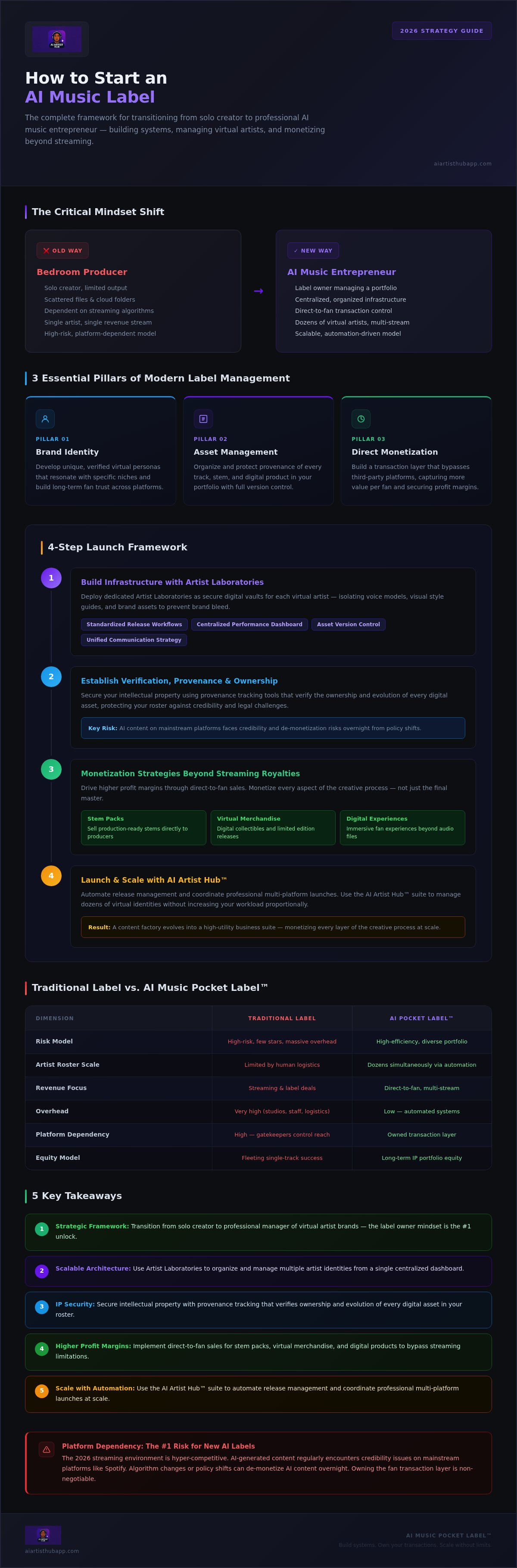
Key Takeaways
- Master the strategic framework for how to start an AI music label by transitioning from a solo creator to a professional manager of virtual artist brands.
- Build a scalable business architecture using Artist Laboratories to organize and manage multiple artist identities from a single dashboard.
- Secure your intellectual property with provenance tracking tools that verify the ownership and evolution of every digital asset in your roster.
- Drive higher profit margins by implementing direct-to-fan sales strategies for digital products like stem packs and virtual merchandise.
- Scale your operations using the AI Artist Hub™ suite to automate release management and coordinate professional multi-platform launches.
The Shift to Virtual: Defining the AI Music Label in 2026
Stop thinking like a musician and start acting like an executive. An AI music label acts as a centralized management platform for virtual artist brands and strategic digital assets. Learning how to start an AI music label involves more than generating audio; it requires building a professional infrastructure that supports multiple revenue streams. You are no longer just a creator. You are a label owner managing a portfolio of intellectual property that scales without the limitations of human logistics.
Traditional labels operate on a high-risk model, betting on a few human stars with massive overhead. The AI Music Pocket Label™ flips this script. It leverages high-efficiency systems to manage dozens of distinct artist identities simultaneously. This model prioritizes long-term equity over the fleeting success of a single track. Transitioning from a solo creator to a label owner is the key to long-term scalability. A creator is limited by their personal output; a label owner is empowered by their systems. By establishing a professional back-office, you manage dozens of virtual identities without increasing your workload proportionally.
Focus your strategy on the three essential pillars of modern label management:
- Brand Identity: Develop unique, verified virtual personas that resonate with specific niches and build long-term trust.
- Asset Management: Organize and protect the provenance of every track, stem, and digital product in your portfolio.
- Direct Monetization: Build a transaction layer that bypasses the limitations of third-party platforms and captures more value per fan.
Why Traditional Distribution is No Longer Enough
The 2026 streaming environment is hyper-competitive. Relying on traditional distribution channels creates platform dependency, which is the single greatest risk for new labels. AI-generated content frequently encounters credibility issues on mainstream platforms like Spotify. You must own the transaction layer. By controlling the fan relationship directly, you bypass the gatekeepers and secure your profit margins against algorithm changes or policy shifts that can de-monetize AI content overnight.
The Rise of the AI Music Pocket Label™
Embrace the AI Music Pocket Label™ model to maximize your operational efficiency. This approach favors high-volume output with low overhead, allowing you to scale a multi-artist roster through automation. You aren't merely distributing audio files. You are commercializing comprehensive artist brands and immersive digital experiences. This evolution transforms your label from a content factory into a high-utility business suite. It allows you to monetize every aspect of the creative process, from the final master to the underlying stems and limited edition digital releases.
Step 1: Building Your Infrastructure with Artist Laboratories
Build your foundation before you build your roster. Professionalism starts with organization, yet many creators fail because they treat their work like a hobby. They scatter files across local folders and unorganized cloud drives. When you learn how to start an AI music label, your first priority is establishing a central label profile. This profile acts as the strategic umbrella for every virtual artist you launch. It provides a single point of truth for your business operations, allowing you to scale without losing control of your assets.
Deploy dedicated Artist Laboratories to isolate and manage individual artist identities. These digital environments serve as the secure vaults for your brand assets, voice models, and visual style guides. By separating your roster into distinct laboratories, you prevent brand bleed. You ensure each virtual artist maintains a consistent persona that fans can recognize and trust. This modular approach is the hallmark of a scalable AI Music Pocket Label™.
Establish a professional back-office by implementing these core infrastructure components:
- Standardized Release Workflows: Create a repeatable system for moving tracks from the laboratory to the marketplace.
- Centralized Performance Dashboard: Aggregate fan data and sales metrics across your entire roster to identify high-growth opportunities.
- Asset Version Control: Document the evolution of your virtual artists to maintain brand continuity over multiple release cycles.
- Unified Communication Strategy: Manage all artist social profiles and fan interactions from a single, organized interface.
Designing Your Label’s Professional Identity
Draft a clear mission statement that defines your label's niche. Whether you focus on cinematic soundscapes or virtual pop stars, your label needs a specific technological and musical angle. Develop a visual brand language that communicates innovation and professional reliability. Choosing a robust label management platform ensures you have the necessary tools to handle a multi-artist roster from day one. This centralized approach allows you to focus on growth rather than administrative clutter.
The Artist Laboratory: Managing Your Roster
Treat each Artist Laboratory as a command center for a specific brand. Store every component of the artist’s identity here, including prompt libraries, visual reference sheets, and specific sonic signatures. Consistency is the currency of trust in the virtual music space. When a project shows commercial potential, migrate it into a full artist brand within your laboratory. This structured transition ensures that every release reinforces the artist's unique value proposition and builds long-term equity in the brand.
Step 2: Establishing Verification, Provenance, and Ownership
Trust is the primary currency of the virtual music market. In a landscape where anyone can generate audio, the professional label owner distinguishes themselves through transparency and legal certainty. When you are learning how to start an AI music label, you must move beyond simple file storage. You need to implement a rigorous system for AI music provenance. This involves documenting the "birth" and evolution of every track, from the initial prompt architecture to the final master. By creating a verifiable paper trail, you protect your business from the credibility gaps that plague casual creators.
Establish a professional standard by utilizing verification tools to prove your label's ownership of virtual artist assets. This is not just about staying organized; it is about compliance with 2026 regulations that demand clear disclosure of synthetic media origins. A robust provenance system allows you to build social proof by displaying verification badges and transparent origin data to your fans. This transparency fosters a sense of security for your audience and potential commercial partners who need to know that your digital assets are legally sound and authentically managed.
Secure your label's future by focusing on these essential verification protocols:
- Model Documentation: Maintain a detailed log of every AI model and version used in your production process to ensure long-term regulatory compliance.
- Identity Verification: Secure your virtual artist profiles against identity theft by using platform-level verification tools that link avatars to your central label entity.
- Immutable Metadata: Embed ownership data directly into your audio files and digital assets to prevent unauthorized use and ensure proper attribution.
- Human-in-the-Loop Certification: Document the creative decisions made by human curators to increase the intellectual property value of your roster.
Why Provenance is the New Copyright
Traditional copyright frameworks often struggle to keep pace with synthetic content. Provenance provides the solution by focusing on the lineage of the creation rather than just the final output. Proving human-in-the-loop involvement is critical because it demonstrates creative intent, which significantly increases the market value of your digital assets. This process also prevents identity theft in the virtual space. By verifying your artist profiles early, you ensure that no third party can "deepfake" your brand or dilute the equity you have built in your virtual roster.
Protecting Your Virtual Intellectual Property
Identify and secure the key digital assets that form the backbone of your label. This includes proprietary voice models, visual avatars, and high-fidelity stems. Metadata plays a vital role here, acting as the digital glue that binds your ownership rights to the assets as they move across different platforms. AI music provenance is the immutable record of a digital artist's creative lineage. By mastering these tools, you transform your label into a credible, professional entity that is ready for the complexities of the modern music industry.
Step 3: Monetization Strategies Beyond Streaming Royalties
Stop chasing the fractions of a cent offered by traditional streaming platforms. If you are researching how to start an AI music label, you must prioritize revenue retention from day one. Streaming is a high-volume, low-margin game that often penalizes synthetic content through complex payout structures. To build a sustainable business, you need to diversify your income. Focus on high-margin digital products and direct-to-fan transactions. This shift transforms your label from a content uploader into a diversified digital asset manager with multiple revenue streams.
Diversify your catalog by offering assets that provide utility to other creators and super-fans. The AI Music Pocket Label™ model thrives on the sale of niche digital products. Don't just sell the song; sell the components that make the song valuable. This approach allows you to capture a much higher percentage of every dollar spent on your brand.
Implement these high-margin monetization strategies to scale your label's profitability:
- Digital Product Bundles: Sell high-fidelity stem packs and MIDI files to other producers and remixers.
- Limited Edition Releases: Create scarcity through digital-only drops that include exclusive artwork or bonus tracks.
- Virtual Merchandise: Develop digital wearables or branded assets for use in virtual environments and social media.
- Artist Laboratory Access: Launch a subscription-based "fan club" that grants exclusive behind-the-scenes access to your creative process and early demos.
Selling Direct: The Path to 100% Revenue Retention
Compare the margins of a million streams to a few hundred direct sales. Direct-to-fan (D2F) strategies allow you to keep the majority of your revenue by cutting out the middleman. By centralizing your sales through a dedicated transaction layer, you avoid the heavy platform fees associated with traditional marketplaces. This control allows you to offer personalized experiences to your most loyal fans while maintaining a healthy bottom line. To maximize your profit margins and control your fan data, launch your direct-to-fan storefront today and start building a recession-proof music business.
Marketplace Integration and Asset Licensing
Expand your reach by leveraging an AI artist marketplace. This platform allows you to trade or license your virtual artist assets to other creators who need high-quality, verified content. Explore B2B licensing opportunities in gaming, social media advertising, and corporate video production. These sectors often require rapid turnarounds and clear ownership rights, which your verified label is uniquely positioned to provide. As you refine your process for how to start an AI music label, consider the ultimate exit strategy: selling a fully developed Artist Laboratory to another label or media company. This treat's your artist brand as a liquid asset rather than just a collection of audio files.
Step 4: Launching and Scaling with AI Artist Hub™
Registering your business on the AI Artist Hub™ platform is the final step in moving from a conceptual plan to a functional enterprise. This is where you consolidate your infrastructure and activate your monetization channels. If you are serious about how to start an AI music label that actually competes in 2026, you can't rely on manual spreadsheets or disparate apps. You need a centralized command center that integrates release management, audience growth, and business training into a single operational flow. This professional environment provides the essential "back-office" tools required to manage a modern digital roster.
Use built-in release management tools to coordinate multi-platform launches across your entire roster. Instead of uploading tracks one by one, you deploy coordinated campaigns that maintain brand consistency. This system allows you to manage the complexity of dozens of artist identities without increasing your administrative overhead. You also gain access to specialized marketing automation tools designed to build fanbases for multiple artists simultaneously. These tools leverage your verified provenance data to build trust with listeners before they even hit play, ensuring your artists stand out in a crowded market.
Scale your operations by utilizing the creator education and business training resources available within the platform. These modules guide you through the nuances of virtual brand management and advanced licensing. By following a structured curriculum, you avoid the common pitfalls of the "trial and error" approach. This disciplined method ensures that every action you take contributes to the long-term equity and commercial viability of your label.
From 1 to 100 Artists: The Scalability Roadmap
Monitor your high-volume roster through a unified dashboard that tracks performance across all virtual brands. This visibility is essential for the "Incubator" approach, where you test new artist concepts in low-risk environments before committing full-scale resources. By analyzing early data, you identify which virtual personas resonate most with your audience. For a deeper dive into high-level growth strategies, review our professional guide on scaling an AI music business.
Automating Your Label’s Marketing Engine
Integrate your social proof and verification badges directly into your marketing funnels to eliminate the credibility gap. Fans in 2026 value transparency. Showing the "proof of creation" through your provenance tools acts as a powerful conversion trigger. Use direct-to-fan engagement tools to automate community building, ensuring your virtual artists stay active and responsive without manual intervention. This automation is what separates a scalable business from a time-intensive hobby. Ready to build your empire? Start your AI Music Pocket Label™ today on AI Artist Hub™.
Scale Your Vision in the New Music Economy
The transition from a casual creator to a professional label owner requires a strategic shift in both mindset and infrastructure. You now have the definitive framework for how to start an AI music label that prioritizes long-term brand equity over fleeting streaming numbers. By implementing Artist Laboratories, you ensure identity consistency across your entire roster. Establishing robust provenance tracking protects your intellectual property while building the trust necessary to thrive in the 2026 marketplace.
You're ready to move beyond the limitations of traditional distribution. Manage your entire virtual roster from one dashboard and verify your artist's provenance with ease. Sell directly to fans using 2026-ready marketplace tools that keep your revenue where it belongs. The future of the industry is modular, automated, and direct. It's time to stop chasing algorithms and start building a scalable asset portfolio.
Take control of your creative output and launch your professional music business today. Build your AI Music Pocket Label™ on AI Artist Hub™ and lead the next generation of digital music entrepreneurs.
Frequently Asked Questions
Is it legal to start a music label for AI-generated artists?
Yes, it's legal to operate a business managing synthetic media and virtual brands. Success depends on maintaining clear records of your production process and ensuring your AI models are used according to their specific licensing terms. Compliance with 2026 transparency standards requires disclosing the use of AI in your creative workflow. This creates a professional foundation for your label while avoiding the legal pitfalls associated with unverified or unbranded content generation.
How do I prove I own the rights to my AI music?
Use provenance tracking tools to document the creative lineage of every track in your portfolio. Proving ownership involves maintaining an immutable record of the human-in-the-loop decisions, prompt architectures, and model iterations used during production. This documentation acts as your digital title deed. Verification tools provide the social and legal proof required to license your assets or sell them in a professional marketplace, ensuring your intellectual property remains secure.
Can I distribute AI music to Spotify and Apple Music in 2026?
You can distribute AI music to major platforms, but you must adhere to their specific disclosure and quality requirements. Platforms in 2026 prioritize verified content and often penalize unorganized, high-volume uploads that lack clear brand identity. When you learn how to start an AI music label, you'll see that success on these platforms requires a professional approach to roster management. Focus on building a legitimate brand rather than flooding the system with unbranded audio.
What is an AI Music Pocket Label™ and how does it differ from a traditional label?
An AI Music Pocket Label™ is a high-efficiency business model designed for managing multiple virtual artist brands from a single dashboard. Unlike traditional labels that require massive physical infrastructure and human logistics, a Pocket Label uses automation to handle roster management and distribution. This model allows a single entrepreneur to scale dozens of artists simultaneously. It prioritizes direct-to-fan monetization and digital asset sales over the high-risk, royalty-dependent model of the past.
Do I need to know how to code to start an AI music label?
No coding knowledge is required to launch or manage your label. Modern business suites provide intuitive, no-code interfaces for roster management, verification, and marketplace integration. You focus on the strategic direction of your artist brands and the commercialization of your assets. The platform handles the underlying technical architecture, allowing you to operate as a visionary architect of your music business without needing a background in software development or data science.
How much does it cost to launch a virtual artist roster?
Launching a virtual roster is significantly more cost-effective than managing human artists. You eliminate expenses related to physical touring, studio time, and traditional artist advances. Your primary costs involve platform subscriptions for your business suite and marketing automation tools. This low-overhead structure allows you to reinvest your capital into brand development and audience growth. It makes the barrier to entry for how to start an AI music label accessible to serious digital entrepreneurs.
How do I handle payments and royalties for virtual artists?
Centralize your financial operations through a direct-to-fan transaction layer to maximize revenue retention. Since virtual artists don't require traditional royalty splits with human performers, you retain a much higher percentage of every sale. Use integrated marketplace tools to automate the collection of payments for digital products like stem packs and limited releases. This system ensures that your revenue flows directly into your label's accounts without the delays common in traditional industry payout cycles.
What is an Artist Laboratory and why do I need one?
An Artist Laboratory is a dedicated digital environment used to isolate and manage the specific assets of a virtual brand. You need one to maintain persona consistency and prevent brand bleed between different artists on your roster. It stores your voice models, visual style guides, and prompt libraries in one secure location. This organization is essential for scaling your operations, as it allows you to manage dozens of distinct identities with professional precision and efficiency.

Article by
Julius J. White (VVS Jules)
Julius J. White (VVS Jules) is the Founder & CEO of JJW AI Studios™ and builder of AI Artist Hub™, a creator-first operating platform for the emerging AI music economy. A musician, songwriter, producer, entrepreneur, and systems builder, he developed the AI Music Pocket Label™ framework around a simple idea: generation is only the beginning. His work focuses on the identity, provenance, credits, ownership context, permissions, artist development, direct-to-fan relationships, commerce, trust infrastructure, and business systems creators need to build durable AI artist brands, organized catalogs, and long-term creative ventures.
Disclaimer
This article is provided for general educational and informational purposes only and does not constitute legal, financial, tax, investment, or other professional advice. Laws, regulations, platform policies, technology, and industry practices may change over time. References to AI Artist Hub™, UP3™, UP3 PLAY™, provenance, verification, ownership assertions, permissions, creator tools, protected media, streaming or platform policies, or AI-related rules describe general information and current product capabilities where verified. They do not constitute government registration, legal adjudication, third-party rights clearance, regulatory approval, copyright ownership, guaranteed authenticity, or guaranteed permission for commercial use. Readers should independently verify current requirements, review applicable platform and rights terms, and consult qualified professionals when appropriate.
