


The most popular music generator you're using right now is likely the worst place to build your actual business. While these tools excel at capability, they often fail at continuity, leaving creators with isolated tracks but no real ownership of their audience data. Learning how to sell AI generated music effectively requires shifting your focus from the generation tool to the commercial infrastructure that supports it.
You've likely felt the frustration of centralized platforms gatekeeping your fans or the anxiety of releasing works without verifiable provenance. It's time to stop acting like a hobbyist and start operating like a founder. You deserve a system that treats your creative output as a scalable asset rather than a disposable file. This guide shows you how to move beyond simple output by selecting a framework designed for identity, provenance, and durable creator-owned commerce.
We'll compare the top 2026 professional platforms to see which ones empower you to establish a professional AI Music Pocket Label™. You'll discover how to secure direct-to-fan revenue streams and manage multiple virtual artist identities with the strategic discipline of a modern record executive.
Key Takeaways
- Distinguish between tools that generate sounds and infrastructure that builds businesses to avoid losing control of your audience data.
- Master how to sell AI generated music by choosing platforms that support multi-artist identity management and direct-to-fan commerce.
- Implement the UP3™ Protocol to create a portable backpack of provenance and rights context for every track in your catalog.
- Transition from a casual creator to a professional founder by deploying the AI Music Pocket Label™ framework for portfolio management.
- Build a durable legacy using generator-agnostic systems that ensure your virtual artists remain verifiable and profitable for the long term.
Beyond the Generator: Why Your AI Music Business Needs Professional Infrastructure
Generation tools provide capability. They let you create a high-quality track in seconds. But capability without continuity is just a hobby. If you want to understand how to sell AI generated music at scale, you've got to look past the "generate" button. Most creators are currently trapped in extractive ecosystems. These platforms provide the tools but own the primary relationship with the listener. They keep the emails, the analytics, and the ultimate control over your reach.
The AI Music Pocket Label™ framework changes this dynamic. It allows you to operate as a professional micro-enterprise. You can manage portfolios of virtual artists with the same discipline as a traditional label while using software to gain massive leverage. Generic e-commerce tools often struggle in this space. They aren't built to handle AI-specific metadata or the complex provenance records that professional buyers and collaborators now demand. You need a foundation that supports the unique requirements of AI-native commerce.
The Problem with Borrowed Audiences
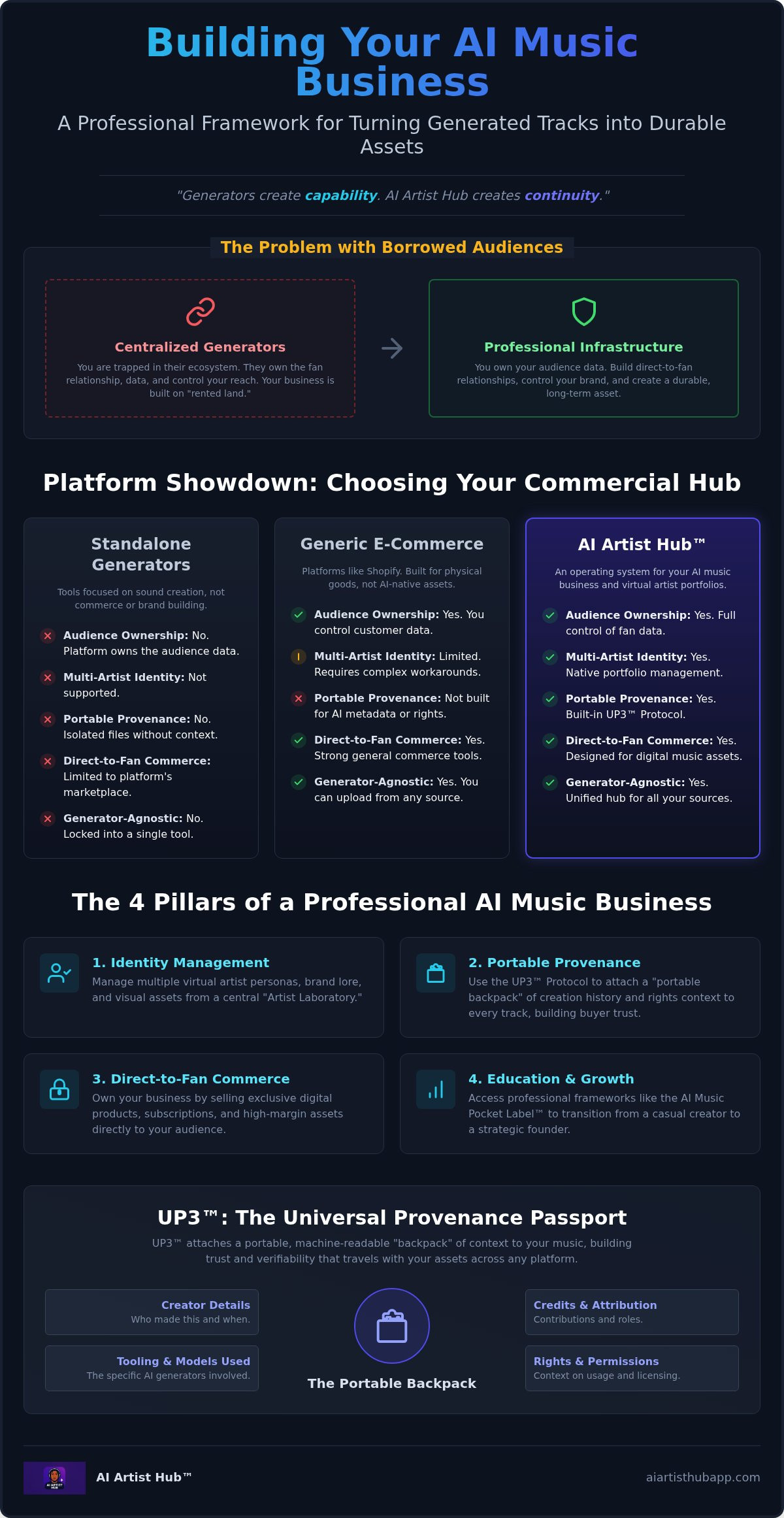
Uploading to a centralized generator platform is like building a house on a rented lot. You don't own the land. If the platform changes its algorithm or its terms, your business can vanish overnight. Moving from a content uploader to a strategic architect means prioritizing direct-to-fan (D2F) relationships. Owning your audience data is the only durable asset you have in 2026. Without it, you aren't building a brand. You're just providing free engagement for a tech giant's ecosystem. True independence requires infrastructure that puts you in control of the fan experience.
The Role of Generator-Agnosticism
Technology moves fast. A dominant AI model today might be obsolete by next quarter. Relying on a single generator creates a massive single point of failure for your venture. A professional infrastructure layer must be generator-agnostic. This approach lets you manage a diverse catalog from multiple sources in one unified Hub. It provides the continuity that individual generators lack. It ensures your business survives and thrives even as the underlying models continue to evolve. This is how you build a portable brand identity that stays with you, regardless of which tool you used to create the initial sound.
Evaluating AI Music E-commerce Platforms: The 4 Pillars of Success
Success in the digital music market requires more than just a storefront. When you evaluate how to sell AI generated music, you must look for a platform that serves as a comprehensive operating system for your brand. A professional infrastructure should be built on four specific pillars to ensure your venture is built on a foundation of trust and professional discipline rather than temporary hype.
- Identity Management: Systems for managing virtual personas, brand lore, and consistent visual assets.
- Portable Provenance: Using structured history and machine-readable credits to build buyer trust.
- Direct-to-Fan Commerce: Tools for selling exclusive digital products, tiered subscriptions, and high-margin assets.
- Education and Growth: Access to professional frameworks and business training for scaling your operations.
Provenance as a Commercial Feature
In a marketplace filled with low-effort content, transparency becomes a premium feature. Buyers want to know the history and permissions associated with the works they support. This is where the UP3™ Protocol adds significant value. Think of it as a portable backpack that travels with your music. This "backpack" contains structured context about the creator, credits, and rights permissions. It doesn't replace legal registration or government contracts, but it provides a portable record that builds buyer confidence. This type of verification allows your reputation to travel across the entire digital ecosystem without losing its context.
Identity Systems in the Artist Laboratory
Managing a single track is easy; managing a portfolio of virtual artists requires a dedicated workspace. The Artist Laboratory provides the environment needed to develop complex brand lore and consistent visual identities. Instead of dealing with isolated files, you organize your virtual artist rosters within a unified system. This approach ensures brand continuity across multiple releases. By maintaining these systems in "The Lab," you move from being a casual uploader to a professional label owner who controls every aspect of the artist's world-building and market presence.
Direct-to-fan commerce is the ultimate goal for any serious creator. You need tools that support high-margin digital products that go beyond simple streaming royalties. When you integrate these commercial tools with professional frameworks for scaling, you create a durable business model. If you are ready to start building your own catalog, you can explore the marketplace to see how professional AI artists are currently positioning their brands for long-term growth.
The Platform Showdown: Generators vs. Shopify vs. AI Artist Hub™
Selecting your sales environment is a high-stakes strategic decision. Many creators default to the platforms where they generate their audio, but these "walled gardens" prioritize their own ecosystem growth over your independent brand. General e-commerce tools like Shopify or Bandcamp offer more autonomy but lack the AI-native metadata and trust records required for professional verification. Mastering how to sell AI generated music effectively means deploying a system that bridges the gap between raw creation and durable, verifiable commerce. You need a foundation that handles the technical complexities of AI assets as a standard feature.
The AI Music Pocket Label™ thesis offers a middle path between disorganized DIY efforts and the restrictive, extractive models of traditional labels. It allows you to operate with the precision of a micro-enterprise while maintaining total creative control. While generalist platforms treat music as a generic digital file, a dedicated infrastructure layer treats your work as a structured asset with a portable history. This distinction is what separates casual uploaders from professional founders who are building scalable, high-value catalogs that can stand up to industry scrutiny.
When to Use Generators as Part of Your Strategy
Treat AI music generators exclusively as high-utility capability tools rather than the foundation of your business. Relying solely on a generator platform for your commercial presence creates a massive single point of failure. If that platform pivots its business model or limits access, you lose your audience and your brand history instantly. Instead, integrate these diverse outputs into a single Artist Laboratory roster. This approach ensures you own the identity and the fan relationship regardless of which specific model created the initial sound. You use the tools for capability but rely on your own infrastructure for continuity.
AI Artist Hub™: The Continuity Layer
The AI Artist Hub™ Marketplace serves as the dedicated direct-to-fan environment for the modern creator. It moves beyond simple transactions by managing commercial activity and fan relationships at a micro-enterprise scale. This environment supports human-centered creativity by ensuring you remain the visionary architect of your digital assets. For those ready to expand their operations, our guide on scaling an AI record label provides the blueprints for organizational growth. By focusing on continuity, you build a brand that remains verifiable and profitable across the entire digital ecosystem.
Building Your AI Music Pocket Label™: A Strategic Roadmap to Launch
Launching a successful venture requires a structured transition from creative experimentation to commercial execution. You've already identified the tools for creation; now you must deploy the systems for professional management. Understanding how to sell AI generated music effectively starts with treating your tracks as a professional catalog rather than a collection of random files. Follow this strategic roadmap to establish your foundation and begin your journey as a founder.
- Step 1: Define Artist Identities. Establish clear personas and world-building lore for every virtual artist in your roster. Fans invest in characters and narratives, not just audio files.
- Step 2: Organize Your Workspace. Centralize your assets within a professional environment like the Artist Laboratory. This ensures consistency across your entire portfolio.
- Step 3: Establish Provenance. Attach a verifiable record to every release. Use the UP3™ Protocol to ensure your credits and rights context travel with your music.
- Step 4: Activate Sales Funnels. Deploy direct-to-fan strategies that prioritize high-margin digital products. This is the most direct method for how to sell AI generated music while maintaining control of your audience data.
- Step 5: Scale Your Operations. Use audience-growth tools and professional education to expand your reach. Leverage software to manage a growing catalog with minimal overhead.
Lore and World-Building in the Lab
Narrative is the engine of brand equity. A compelling virtual artist needs a story that resonates with a specific fan base. Use the Artist Laboratory to craft these backgrounds and maintain visual consistency across all platforms. This world-building transforms a single release into a durable brand. As you expand your catalog, consider diverse revenue streams by exploring various digital product ideas that go beyond standard audio tracks. Consistent branding ensures your audience stays engaged with the artist's journey over the long term.
Activating Recurring Revenue Models
Recurring revenue provides the financial stability needed to scale your label. Instead of relying on one-off sales, establish subscription models that offer fans exclusive access and early releases. You can find detailed strategies for this in our guide on AI music subscription service models. Selling exclusive content and digital collectibles through a secure marketplace allows you to capture more value from your most dedicated supporters. This direct-to-fan approach ensures that you, the creator, retain the majority of the revenue generated by your virtual artist roster.
Establish your Pocket Label™ infrastructure today
Continuity and Legacy: Scaling Your AI Music Brand for the Long Term
Scaling requires a fundamental shift in perspective. You've established the mechanics of how to sell AI generated music through direct-to-fan channels; now you must ensure your business architecture remains durable. Legacy isn't built on a single viral track. It's built on a catalog that retains its value even as underlying AI models evolve or disappear. By prioritizing continuity over temporary capability, you secure your position as a visionary architect in a rapidly shifting industry.
Professional Education for the AI Era
Transitioning from a creator to an entrepreneur requires a new set of competencies. Use the Academy's resources to master the complexities of roster management and strategic marketing. Deploy our planner and release tools to maintain a disciplined cycle that builds momentum with every drop. You're not just uploading files; you're managing a professional enterprise. Engaging with a community of world-builders allows you to exchange strategic insights and refine your approach to scaling a modern record label.
Future-Proofing Your Business Architecture
Human-centered infrastructure provides the ultimate competitive advantage in a crowded market. As the volume of digital content increases, trust and transparency become your most valuable assets. This is why portable identity is essential. Using the UP3™ Protocol ensures your work carries its "portable backpack" of context and credits wherever it goes. This history ensures your creations remain verifiable for decades, regardless of the platform used for playback. It's about portability of information, ensuring that the intent and origin of your work stay intact as it moves through the ecosystem.
Treat your venture as a strategic asset rather than a series of isolated generations. A professional business foundation allows you to capture long-term value and build a brand that outlasts the current technological cycle. Success comes to those who build for continuity. You can explore the AI Artist Hub™ Marketplace to see how professional founders are already shaping the future of D2F commerce.
Architecting Your Future in the AI Music Economy
Building a durable music venture requires a strategic shift from simple generation to professional infrastructure. You've seen that the most successful creators in 2026 are those who prioritize continuity, identity, and direct-to-fan relationships over isolated tracks. By moving beyond the restrictive ecosystems of centralized generators, you take full control of your audience data and brand equity. This independence is the only way to ensure your business survives the rapid shifts in model technology and platform policies.
Mastering how to sell AI generated music effectively involves deploying a generator-agnostic operating environment that supports your long-term vision. Utilizing the AI Music Pocket Label™ framework allows you to manage complex portfolios with professional discipline while the patent-pending UP3™ protocol provides the portable provenance your buyers demand. This foundation ensures your creative legacy remains verifiable and profitable as the industry continues its evolution toward a decentralized, creator-led future.
Build your AI Music Pocket Label™ on AI Artist Hub™
The tools are ready for those prepared to lead. Take command of your career and start building a business that reflects your ambition and visionary spirit.
Frequently Asked Questions
What is an AI music e-commerce platform vs. a generator?
Generators create capability; e-commerce platforms like AI Artist Hub™ create continuity. A generator produces the raw audio file. An e-commerce infrastructure provides the business layer to manage that file as a commercial asset. This includes tools for identity management, provenance records, and direct-to-fan sales systems. You need both to move from being a casual uploader to a professional founder who owns their audience relationships and data.
Can I sell music created using AI generation tools?
Yes, you can sell this music, but success depends on your commercial infrastructure and the terms of the specific AI generator used. Learning how to sell AI generated music effectively requires moving tracks into a dedicated business environment like the Artist Laboratory. Here, you can wrap raw audio in professional branding and provenance data. Always check your chosen generator's subscription tier to ensure you have the necessary commercial usage permissions for your releases.
How does the AI Music Pocket Label™ framework differ from a traditional label?
A traditional label typically involves restrictive contracts and centralized control over your creative output. The AI Music Pocket Label™ is a creator-centered framework designed for individual or micro-enterprise scale. It gives you label-like discipline and software leverage without the extractive overhead of old industry models. You retain direct relationships with your fans and total control over your virtual artist roster, allowing for an agile and more profitable business model.
What is the difference between AI Artist Hub™ and the UP3™ Protocol?
AI Artist Hub™ is the operating environment where you build your business and manage artist identities. The UP3™ Protocol is a portable provenance layer that creates a machine-readable passport for your work. Think of the Hub as your primary office and the UP3™ Passport as a portable backpack that travels with your music. This backpack contains structured context about credits and rights, ensuring your information remains portable across different platforms.
Do I need a lawyer to handle copyright for my AI music label?
Professional creators often consult legal experts for complex contracts and rights clearance. While AI Artist Hub™ provides tools for provenance and verification, it doesn't offer legal services or guarantee copyright registration. Establishing a clear record of your creative process is a practical business step, but it doesn't replace the need for professional legal advice or government registration. You should treat your AI label with the same legal diligence as any traditional creative venture.
How do I build trust with fans when using virtual artists?
Trust is built through transparency, consistent world-building, and verifiable provenance. Fans connect with compelling narratives and clear identities developed in the Artist Laboratory. Using tools like the UP3™ Protocol allows you to provide a structured history of your work, which builds confidence in your brand. When you prioritize responsible participation and clear attribution, you transform a virtual persona into a durable creative legacy that fans can support with long-term confidence.
What kind of digital products can I sell besides audio files?
Your catalog can expand far beyond simple audio files to include tiered subscriptions, exclusive brand lore, and digital collectibles. Creators often sell high-resolution stems, virtual artist visual assets, and access to exclusive community spaces. The AI Artist Hub Marketplace is designed to support these diverse digital products. This direct-to-fan approach allows you to capture more value from your artist identities while providing unique experiences that build deep and lasting fan loyalty.
Why is generator-agnosticism important for my business long-term?
Relying on a single AI model creates a significant single point of failure for your brand. A generator-agnostic approach ensures your business infrastructure remains stable even if a specific generation tool changes its terms or disappears. By centralizing your operations in a unified hub, you can manage a diverse catalog from multiple sources. This flexibility allows you to adapt to new technologies without losing your audience data or your established brand identity.

Article by
Julius J. White (VVS Jules)
Julius J. White (VVS Jules) is the Founder & CEO of JJW AI Studios™ and builder of AI Artist Hub™, a creator-first operating platform for the emerging AI music economy. A musician, songwriter, producer, entrepreneur, and systems builder, he developed the AI Music Pocket Label™ framework around a simple idea: generation is only the beginning. His work focuses on the identity, provenance, credits, ownership context, permissions, artist development, direct-to-fan relationships, commerce, trust infrastructure, and business systems creators need to build durable AI artist brands, organized catalogs, and long-term creative ventures.
Disclaimer
This article is provided for general educational and informational purposes only and does not constitute legal, financial, tax, investment, or other professional advice. Laws, regulations, platform policies, technology, and industry practices may change over time. References to AI Artist Hub™, UP3™, UP3 PLAY™, provenance, verification, ownership assertions, permissions, creator tools, protected media, streaming or platform policies, or AI-related rules describe general information and current product capabilities where verified. They do not constitute government registration, legal adjudication, third-party rights clearance, regulatory approval, copyright ownership, guaranteed authenticity, or guaranteed permission for commercial use. Readers should independently verify current requirements, review applicable platform and rights terms, and consult qualified professionals when appropriate.
